A school certificate, advice from a grandparent and a computer training course may seem like three unrelated things. However, each represents a different way of learning. Education can take place through a fixed school curriculum, everyday experiences or organised programmes outside the regular education system. These are known as formal, informal and non-formal education. Although their methods are different, all three contribute to a person’s knowledge, abilities and development.
What Are the Different Types of Education?
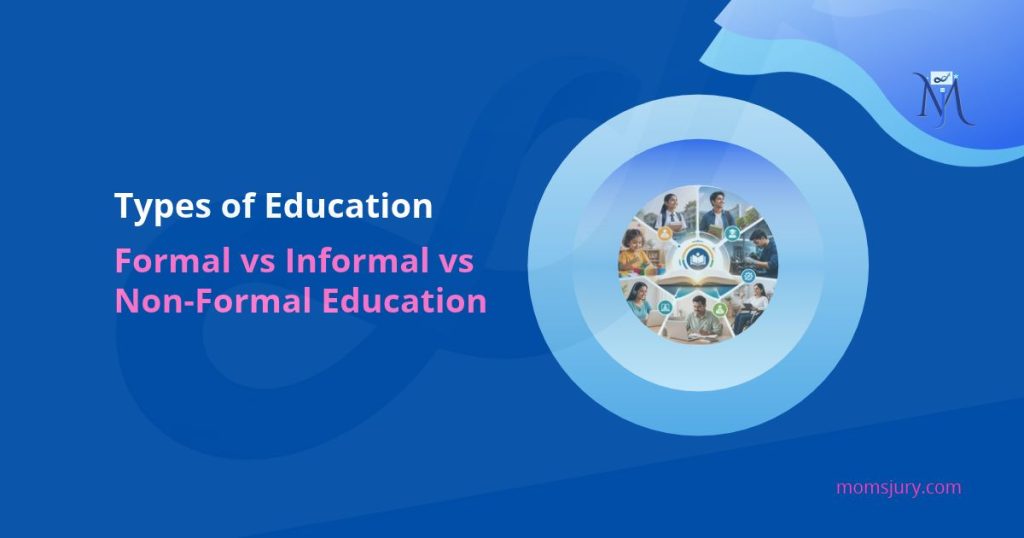
Education takes place in different ways, depending on where a person learns, how lessons are organised and who provides the knowledge. It is generally divided into three main types: formal, informal and non-formal education.
1. Formal Education
Formal education follows a planned curriculum within recognised institutions such as schools, colleges and universities. Students attend classes, complete assignments and take examinations as part of their studies. School education and university degree programmes are formal education examples.
2. Informal Education
Informal education happens naturally through everyday experiences rather than planned lessons. People learn from family members, friends, surroundings, personal experiences and daily activities. Learning to cook from a parent, developing communication skills through conversations and picking up practical knowledge at home are informal education examples.
3. Non-Formal Education
Non-formal education involves organised learning outside the regular school or college system. It usually offers flexible courses or training to help people develop specific knowledge and skills. Computer training, vocational courses, adult literacy programmes and short-term skill development classes are non-formal education examples.
Formal vs Informal vs Non-Formal Education: Comparison Table
| Formal Education | Informal Education | Non-Formal Education |
|---|---|---|
| Learning takes place in schools, colleges and universities. | Learning happens through daily activities and personal experiences. | Learning takes place through organised courses and training outside the regular education system. |
| Follows a fixed curriculum. | Does not follow a planned curriculum. | Follows a flexible learning plan or course structure. |
| Has a fixed academic schedule. | Has no fixed schedule or timetable. | Offers flexible learning timings. |
| Usually taught by qualified teachers or professors. | Knowledge is gained from family, friends, colleagues and surroundings. | Learning is guided by trainers, instructors or facilitators. |
| Includes examinations, assignments and regular assessments. | Does not usually involve formal examinations. | May include practical tests, assignments or assessments. |
| Generally leads to recognised certificates, diplomas or degrees. | Does not usually provide formal qualifications. | May provide certificates depending on the programme. |
| Examples: School education, college degrees and university courses. | Examples: Learning cooking at home, developing communication skills and learning through everyday experiences. | Examples: Computer courses, vocational training, adult literacy programmes and skill development classes. |
Similarities Between Formal, Informal and Non-Formal Education
Formal, informal and non-formal education follow different learning methods, but all three help people gain knowledge and develop useful skills. They share a few common purposes:
- Support learning and development: Each type helps people gain knowledge, understand new ideas and improve their abilities.
- Develop practical skills: They help individuals build skills that can be useful in personal life, education and work.
- Improve confidence: Learning new things gives people the confidence to handle different situations and take on new responsibilities.
- Encourage personal growth: All three forms of education help people improve their thinking, behaviour and understanding of the world.
- Continue throughout life: Learning is not limited to childhood or school years. People can gain knowledge and skills at any age through different learning experiences.
Difference Between Formal, Informal and Non-Formal Education
The main difference between these three types of education lies in how learning is planned and delivered. Formal education follows a structured curriculum in recognised institutions, informal education develops through everyday experiences, and non-formal education provides organised learning outside the regular school system.
For example, studying mathematics in school is formal education, learning household budgeting from parents is informal education, and attending a financial literacy workshop is non-formal education. Each approach offers a different way to gain knowledge and apply it in daily life.
While formal education generally follows fixed academic schedules and examinations, informal learning has no set structure. Non-formal education falls between these approaches in terms of organisation, as it has planned learning activities but usually offers more flexibility than regular school or college education.
Importance of Formal, Informal and Non-Formal Education
Education is not limited to academic lessons or classroom teaching. People need different kinds of learning experiences to build knowledge, develop practical abilities and handle everyday responsibilities. Formal, informal and non-formal education each contribute to personal growth in their own way.
Importance of Formal Education
Formal education provides the academic foundation needed for higher studies and many career opportunities. It helps students develop subject knowledge and learn in a structured environment.
- Builds a strong foundation in subjects such as mathematics, science, languages and social studies.
- Provides recognised qualifications that are required for many higher education courses and jobs.
- Develops discipline, time management and the ability to work towards academic goals.
- Encourages students to think critically, solve problems and understand different subjects.
Importance of Informal Education
Informal education helps people learn from situations they experience every day. It develops practical knowledge and life skills that may not always be covered in textbooks or classroom lessons.
- Teaches everyday skills such as communication, cooking, budgeting and decision-making.
- Helps children understand values, good habits and social behaviour through family and community interactions.
- Allows people to learn from mistakes, observations and personal experiences.
- Encourages curiosity and the habit of learning new things throughout life.
Importance of Non-Formal Education
Non-formal education gives people opportunities to learn outside the regular school and college system. It is especially useful for those who want to gain specific skills, continue learning or improve their employment opportunities.
- Provides flexible learning opportunities for people who cannot attend regular schools or colleges.
- Helps individuals develop job-related skills through vocational courses and practical training.
- Offers opportunities for adults to improve their literacy, digital knowledge and professional abilities.
- Supports career development by allowing people to learn new skills or update existing ones.
How Do Different Types of Education Work Together?
Formal, informal and non-formal education are not separate learning experiences that always happen independently. They often complement one another in a person’s life. A child may learn mathematics and science at school, develop communication and social skills through family interactions, and gain practical knowledge by attending a hobby class or workshop.
Consider a student who learns about computers as part of the school curriculum. At home, the student may improve those skills by exploring different software or helping family members with digital tasks. Later, attending a computer training course can provide more specialised knowledge. Each experience adds something different to the learning process.
When these three forms of education work together, individuals get opportunities to develop academic knowledge, practical abilities and life skills. This combination makes learning more useful and helps people apply what they know in real-life situations.
Which Type of Education Is Best?
There is no single type of education that is best for everyone. Each serves a different purpose and supports learning in its own way. Formal education provides academic knowledge and recognised qualifications, informal education helps people develop life skills through everyday experiences, and non-formal education offers opportunities to gain specific skills through flexible courses and training.
For students, formal education provides the foundation for higher studies and future careers. Informal learning helps them develop confidence, communication and practical abilities, while non-formal programmes allow them to explore interests such as music, sports, computers and other skills.
Rather than choosing one over the others, it is useful to recognise the value of all three. Combining classroom learning with everyday experiences and additional training gives individuals a wider range of knowledge and skills that can support them throughout life.
Frequently Asked Questions About Different Types of Education
1. What are the three main types of education?
The three main types of education are formal, informal and non-formal education. Formal education takes place in schools and colleges, informal education happens through everyday experiences, and non-formal education involves organised learning outside the regular education system.
2. What is the main difference between formal and informal education?
Formal education follows a planned curriculum in recognised institutions and usually includes examinations. Informal education happens naturally through family interactions, personal experiences, observations and daily activities without a fixed curriculum.
3. What is an example of non-formal education?
Vocational training, computer courses, adult literacy programmes, language classes and short-term skill development programmes are examples of non-formal education.
4. Is online learning formal or non-formal education?
Online learning can be either formal or non-formal, depending on how the course is organised. An online university degree is an example of formal education, while a short online skill development course outside a formal academic programme is generally considered non-formal education.
5. Is learning at home considered informal education?
Yes. Children learn many things at home through conversations, family activities, observations and everyday experiences. These are common examples of informal education.
6. Does non-formal education provide certificates?
Some non-formal education programmes provide certificates after successful completion, while others focus mainly on practical learning and skill development. Certification depends on the organisation and the course.
7. Can a person receive all three types of education?
Yes. A person can experience all three throughout life. For example, someone may attend school or college, learn practical skills from family and daily activities, and join additional training programmes to develop professional or personal interests.
8. Which type of education is important for children?
All three types are useful for children’s development. Formal education builds academic knowledge, informal education helps children learn values and everyday skills, and non-formal education gives them opportunities to explore interests through activities, workshops and training.
9. Is non-formal education the same as informal education?
No. Non-formal education involves planned learning activities outside the regular school system, whereas informal education develops naturally through everyday experiences without a structured course or curriculum.
10. What is the importance of informal education in daily life?
Informal education helps people develop practical skills, communication abilities, good habits and decision-making skills. It allows individuals to learn from their surroundings and apply their knowledge to everyday situations.