Most parents want their kids to become a little more independent — whether it’s getting ready on their own, eating without help, or simply managing small daily tasks. But the tricky part is this: preschoolers don’t really learn independence through instructions. A lot of these moments already happen at home — they just need a little patience (and sometimes a willingness to tolerate a bit of mess).
Here are some simple and fun independent activities for preschool kids that you can easily try at home.
Top 10 Independent Activities for Preschool Kids
1. Dressing Up on Their Own
This is one of the easiest ways to build independence, and it fits right into your daily routine without needing any extra setup.
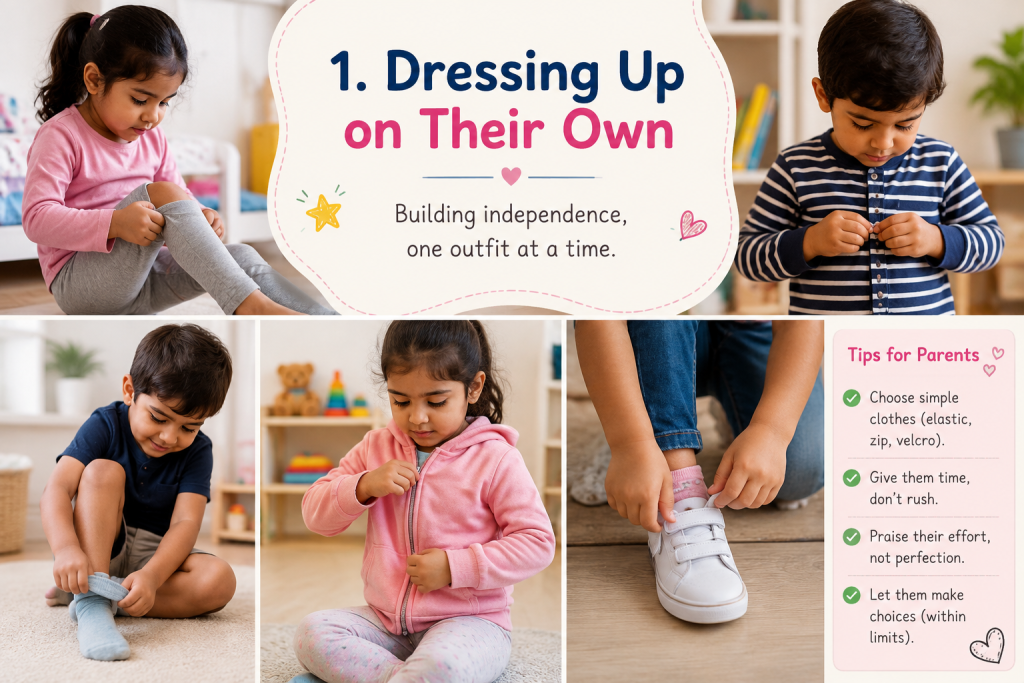
Start small — things like loose t-shirts, elastic pants, or Velcro shoes make it much easier for kids to try on their own. In the beginning, they’ll take longer, wear things backwards, or even mix up outfits completely.
The goal here isn’t getting it perfect — it’s letting them figure it out at their own pace. Over time, you’ll notice they need less help and feel more confident doing it themselves.
A simple trick: lay out 2 outfit options instead of the whole wardrobe — it avoids overwhelm but still gives them a sense of choice
2. Cleaning Up After Play
This independence activity for preschooler doesn’t need to feel like a chore — it can easily become part of playtime itself.
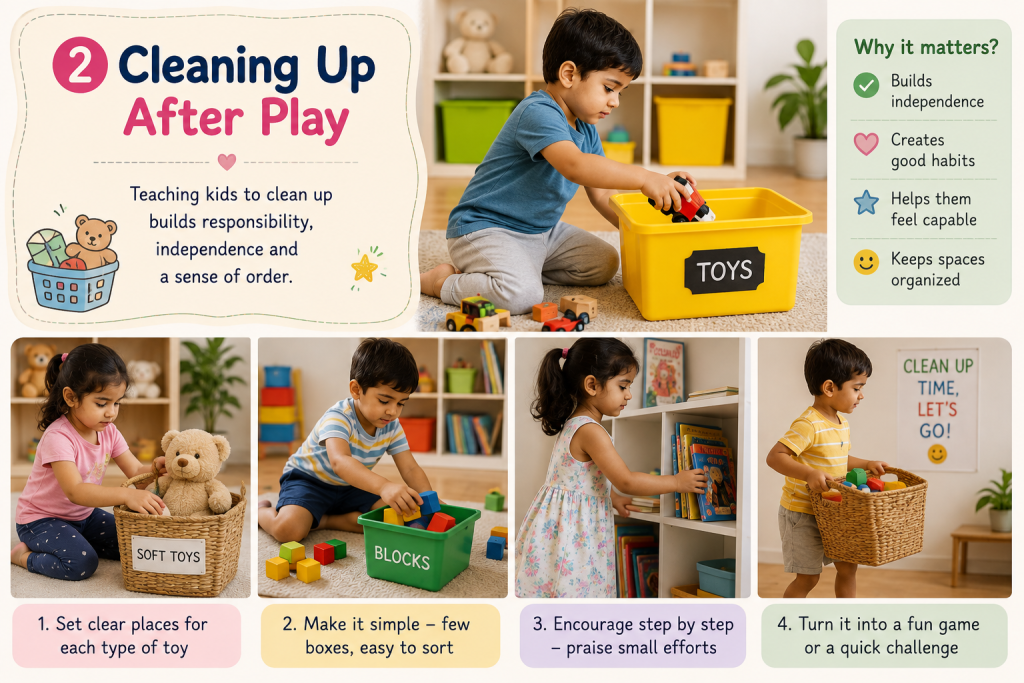
After your child finishes an activity, gently guide them to put things back where they belong. At first, you’ll probably do most of it together, pointing out where items go — blocks in one box, books on a shelf, soft toys in a basket. Over time, they start remembering the pattern.
What helps is keeping things simple. Too many storage options can confuse them, so a few clearly defined spots work better than a fully organised system.
Try turning it into a quick game — “let’s see how fast we can clean up together” — kids usually respond better when it feels fun rather than forced
3. Simple Snack Preparation
Getting kids involved in small snack tasks is a natural way to build independence without making it feel like “learning.”
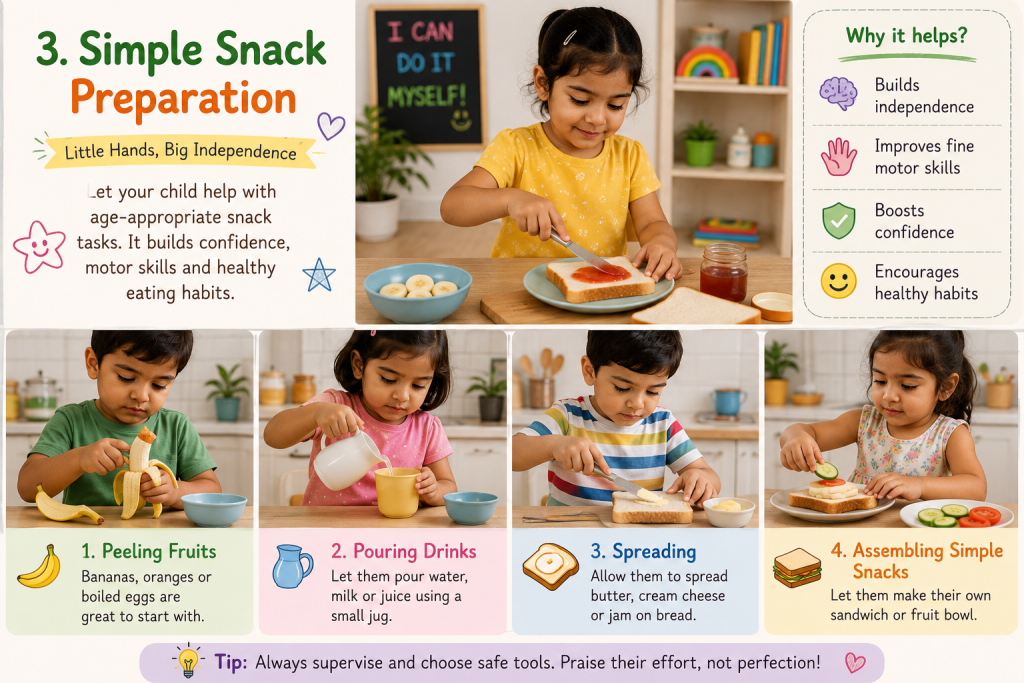
You can start with very basic things — peeling a banana, pouring water into a cup, or spreading butter on bread. These are simple actions, but they help improve hand coordination and confidence at the same time.
It may get a little messy in the beginning, especially with pouring or spreading, but that’s part of the process. With a bit of patience, they slowly figure out how to control their movements better.
Keeping tasks age-appropriate makes a big difference — no sharp tools, no complicated steps, just small things they can manage on their own.
A helpful approach: stay nearby and guide only when needed, instead of stepping in too quickly — it encourages them to try first
4. Brushing Teeth Routine
Brushing doesn’t have to start as a “perfect habit” — it usually begins with kids just trying things out.
Initially they will hold the brush properly, other days they’ll just play with foam and water. That’s part of how they learn. Letting them attempt it on their own builds comfort with the routine instead of resistance.
Joining them helps a lot. When they see you brushing, they tend to copy naturally, which makes the whole thing easier than constant reminders. Consistency helps more than perfection here. Even if they don’t do it “properly” at first, the habit starts forming early.
Try using a simple cue like a song or timer — it keeps them engaged and gives structure without constant reminders.
5. Cleaning Up Toys
Toy cleanup rarely goes smoothly in the beginning — most kids will either wander off or get distracted halfway through.
Few days your kids do it willingly, other days they won’t — that’s pretty normal. What matters is repeating the routine without turning it into a strict rule every single time.
A small trick that works in many homes is making it part of play itself — like “let’s see how fast we can put these back” or turning it into a mini challenge.
Over time, they begin to connect playtime with putting things back, and it slowly becomes their habit without much pushing.
6. Washing Hands Independently
Handwashing doesn’t usually become a habit in one go — it starts with preschoolers just exploring water and soap.
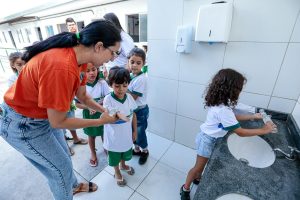
For some days kids wash properly, other days they’ll just splash around or rush through it. That’s completely fine in the beginning. Letting them try without correcting every step helps them get comfortable with the routine.
Doing it alongside them makes a difference. When they see you washing hands before meals or after coming home, they tend to follow without much prompting. It feels more natural than being told again and again.
Linking it to small moments in the day works well — like before eating or after outdoor play. Over time, they begin to go on their own, even if it’s not perfect. That’s usually how the habit slowly settles in.
7. Eating Without Help
Mealtime independence doesn’t show up overnight — it usually begins with kids wanting to try things on their own.
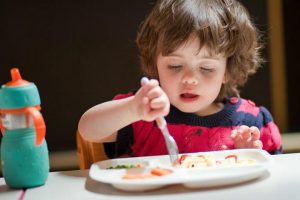
Few days they will manage a few bites neatly, and on other days, food might end up everywhere except the plate. That’s just how it goes in the beginning. Giving them space to try, even if it gets messy, helps them learn faster than stepping in too quickly.
Sitting and eating together makes a difference. When they watch others using a spoon or finishing their food, they naturally try to copy that behavior without being pushed. It feels more like part of the routine than something they’re told to do.
Keeping things simple helps — small portions, easy-to-hold spoons, and familiar foods. Over time, they begin to eat more on their own, little by little, and the confidence builds quietly.
8. Getting Dressed
Getting dressed doesn’t start with kids doing everything on their own — it usually begins with small attempts and a lot of trial and error.
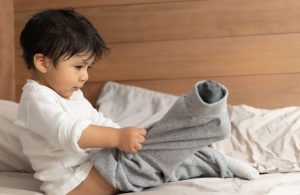
Some days they’ll manage to put on a shirt the right way, and other days it might be backwards or inside out. That’s part of how they figure things out. Letting them try, even if it takes longer, helps them get used to the process.
Being around while they do it helps more than stepping in right away. When they see how you pick clothes or adjust them, they slowly start copying those little actions on their own. It feels less like a task and more like something they can handle.
Keeping choices simple makes it easier — a couple of outfit options instead of too many. Over time, they begin to do more by themselves, and the routine starts to feel familiar.
9. Putting Away Shoes
This habit doesn’t usually stick right away — it starts with kids leaving their shoes wherever they take them off.
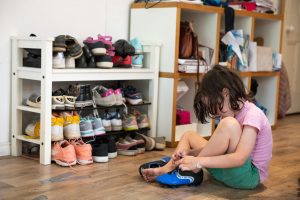
Doing it together in the beginning helps. When they see you placing your shoes in the same spot daily, they begin to follow that pattern without much reminding. It slowly becomes something they recognize as part of coming home.
Keeping one fixed place for shoes makes it easier. Over time, they start putting them away on their own, even if they don’t get it right every single time.
10. Packing Their Bag
Packing a bag doesn’t become a habit instantly — it usually starts with kids forgetting things or needing reminders.
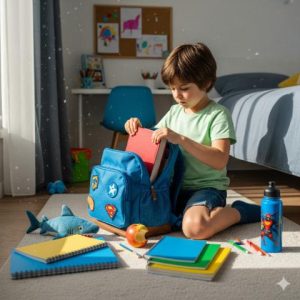
Going through it together in the beginning makes it easier. When they see you checking what goes inside, they begin to understand the pattern without feeling pressured. It becomes something familiar rather than a task they’re told to finish.
Keeping the routine the same each day helps — similar items, same order. Over time, they start remembering on their own, even if they miss a step here and there.
Conclusion
These small routines don’t usually turn into habits all at once — they build slowly through everyday moments. What starts as play, mistakes, or partial attempts gradually becomes something familiar and easier for children to handle on their own.
Provided these simple independent activities for preschool kids begin to fit naturally into their day, and that’s when independence starts to show in small but meaningful ways.